Dear friend with sciatic pain,
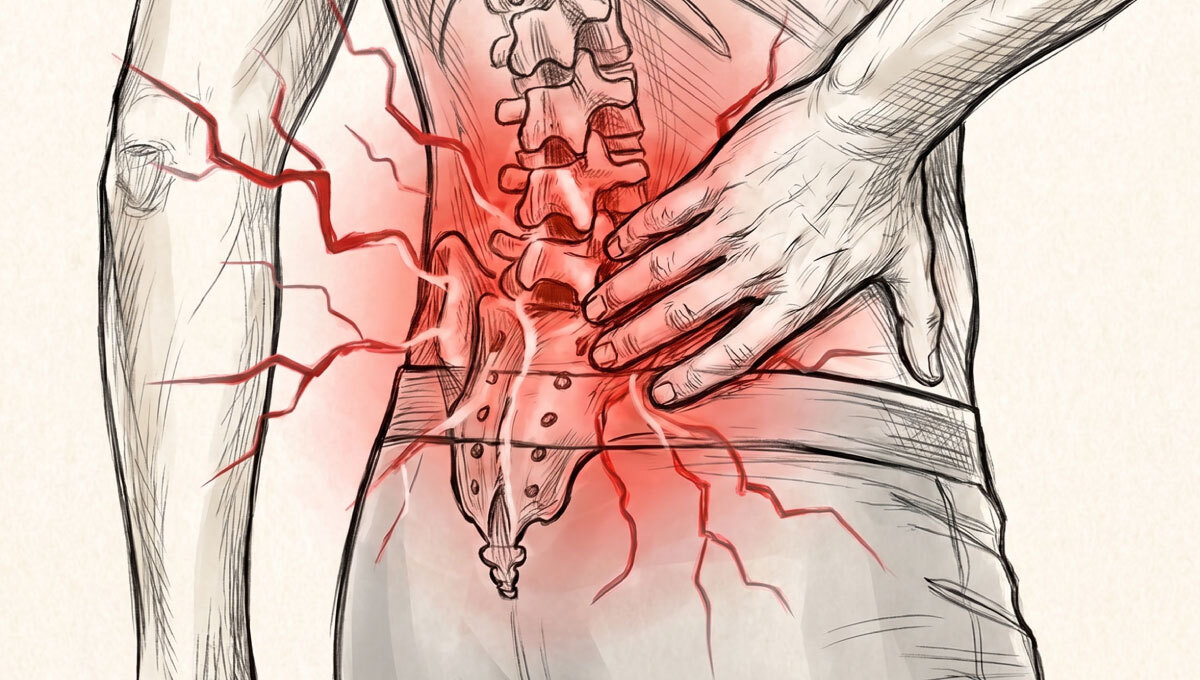
If you're reading this with your lower back throbbing...
If you can't sit for more than 20 minutes without sharp pain
shooting down your leg...
If you've woken up at 3 AM unable to move because your sciatic
nerve feels like it's on fire...
Then what I'm about to share could save you from surgery, years
of injections, and a lifetime of chronic pain.
And I need you to hear this now — not tomorrow, not next week —
because what's happening inside your spine right now is getting
worse with every hour you sit, drive, or hunch forward.
Here's the simple truth:
There is one specific, measurable problem in your lower back
that is crushing your sciatic nerve. It has a name. It has a
number. And it has a fix.
The problem is that
your spine is going flat.
Your lower back is supposed to have a natural inward curve. When
that curve disappears — from years of sitting, driving, or
hunching — the space your sciatic nerve needs to function gets
crushed.
Fix the curve, and the nerve has room again. The pain
stops.
That's it. That's the whole thing.
So why hasn't your doctor told you this?
Not because of some shadowy conspiracy. The reason is much more
frustrating than that:
Fixing your spinal curve is too simple and too cheap to fit
into the current medical system.
There's no recurring revenue in a one-time fix. No billable
procedure codes for "restored the patient's spinal angle."
Physical therapy focuses on muscles, not the curve. Injections
reduce swelling, not the curve. Surgery removes disc material,
but the flat spine that caused the problem? That stays
flat.
You keep going back because nobody fixes the thing that's
actually broken.
I know this because I was part of that system for 32
years.
Until I watched it fail the one person I'd give anything to
save.
My Father Gave Me Everything. I Couldn't Give Him Relief.
![]()
My name is Dr. James Barkley. I'm a board-certified orthopedic
surgeon. I trained at Johns Hopkins. I've performed over 600
spinal surgeries.
None of that could help my father when he needed me most.
My dad, Robert, drove long-haul trucks for over 30 years. Twelve
to fourteen hours a day hunched over a steering wheel so my
sister and I could go to college. So I could go to medical
school.
He gave us everything. His spine paid the price.
For most of his career, he was fine. Tough. Indestructible, we
thought. Some lower back stiffness at the end of a long haul,
sure — but nothing a hot shower and some ibuprofen couldn't
handle.
Then, three years ago, something shifted.
It started small. A sharp jolt
down his left leg one morning getting out of the cab. He shook
it off. Drove his route. But it came back the next day. And the
day after that. Within a month, the shooting pain was
constant.
Within six months, he was on
three prescriptions just to get through a shift. He saw a
chiropractor — temporary relief that wore off faster each time.
He started compensating — shifting his weight, adjusting his
seat, gripping the wheel differently. Nothing helped for long.
His left foot started going numb.
Within eighteen months, an MRI
told the story: a severely degenerated disc at L4-L5, pressing
directly on his sciatic nerve. His spinal curve was almost
completely gone — flattened by decades of sitting that had
finally crossed a tipping point. His surgeon recommended a
microdiscectomy. Dad refused. "I'll manage," he said.
He didn't manage. He collapsed.
By year three, the pain owned his
entire lower body. His back, his hip, his leg. He couldn't
drive. Couldn't stand long enough to cook a meal. Couldn't sit
through his grandchild's birthday party without excusing himself
to lie on the floor.
Three years. That's all it took to go from "some stiffness" to
"I can't live like this."
The man who carried our entire family on his back was now
convinced he was nothing but a burden.
That's when I found him.
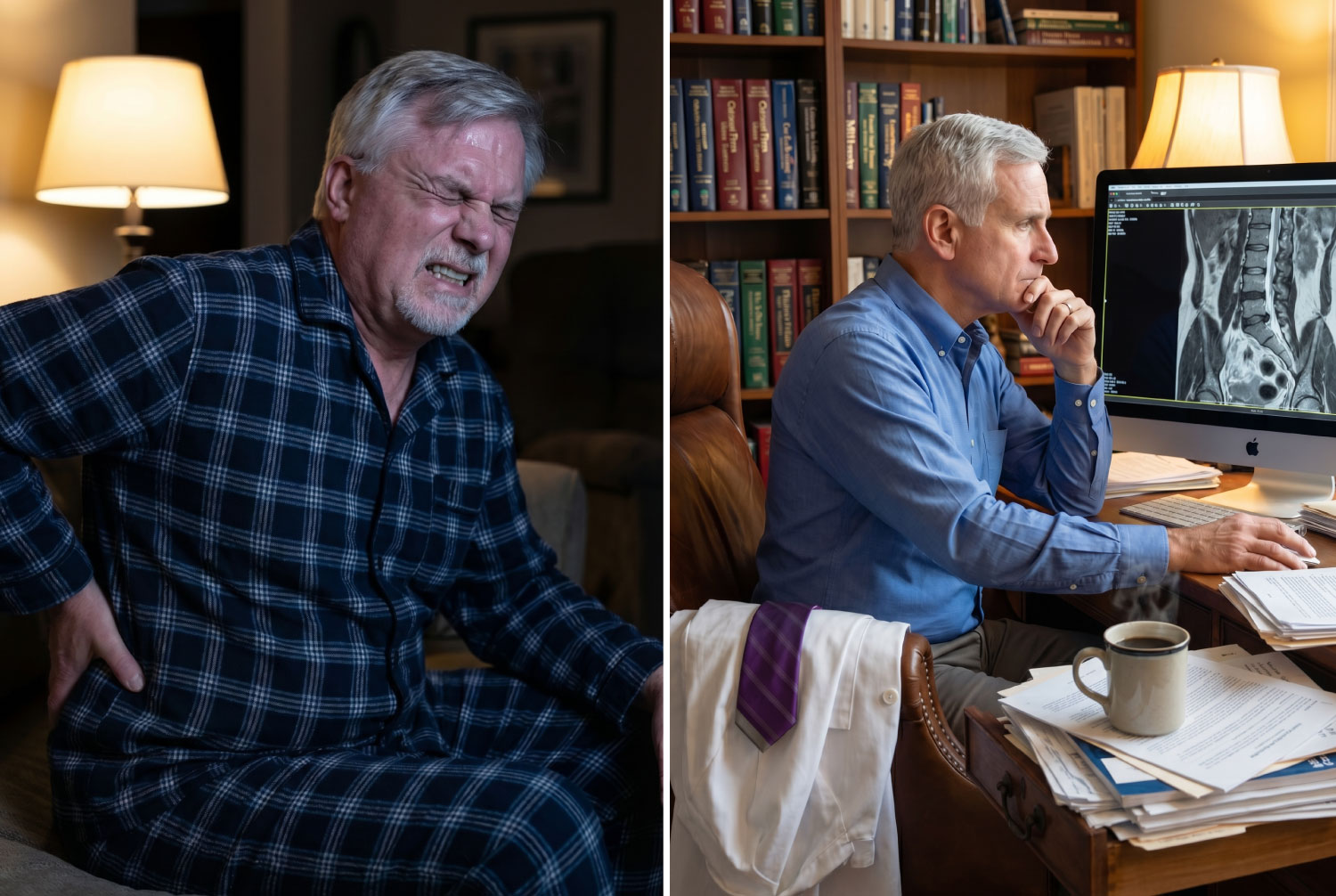
2:15 AM. On the couch. Unable to move. Tears running down his
face.
Not from the pain — though the pain was terrible.
From defeat.
"James," he whispered. "I'm done. I'm just a burden now."
Something broke in me that night.
I was an orthopedic surgeon with 600 surgeries under my belt,
plaques on my wall, and patients who trusted me with their
spines.
And I couldn't help my own father.
You're probably thinking: "You're a spine surgeon. Why not just
operate?"
Because I knew the numbers too well. At his age, with his level
of disc degeneration and muscle atrophy, a microdiscectomy had
roughly a 50/50 chance of meaningful improvement — and a real
chance of making him worse. I'd seen it happen to patients with
his exact profile. Scar tissue forms around the nerve. The
adjacent disc breaks down next. You're back on the table in two
years for a fusion. I wasn't going to put my father on that
conveyor belt.
Surgery couldn't fix what was structurally wrong. It could only
remove damaged tissue from a spine that was still collapsing.
That's not a solution. That's a delay.
That night, I stopped following the playbook. And I started
asking a different question.
The Question Nobody Was Asking
![]()
For 32 years, I treated sciatica the same way every spine surgeon
does:
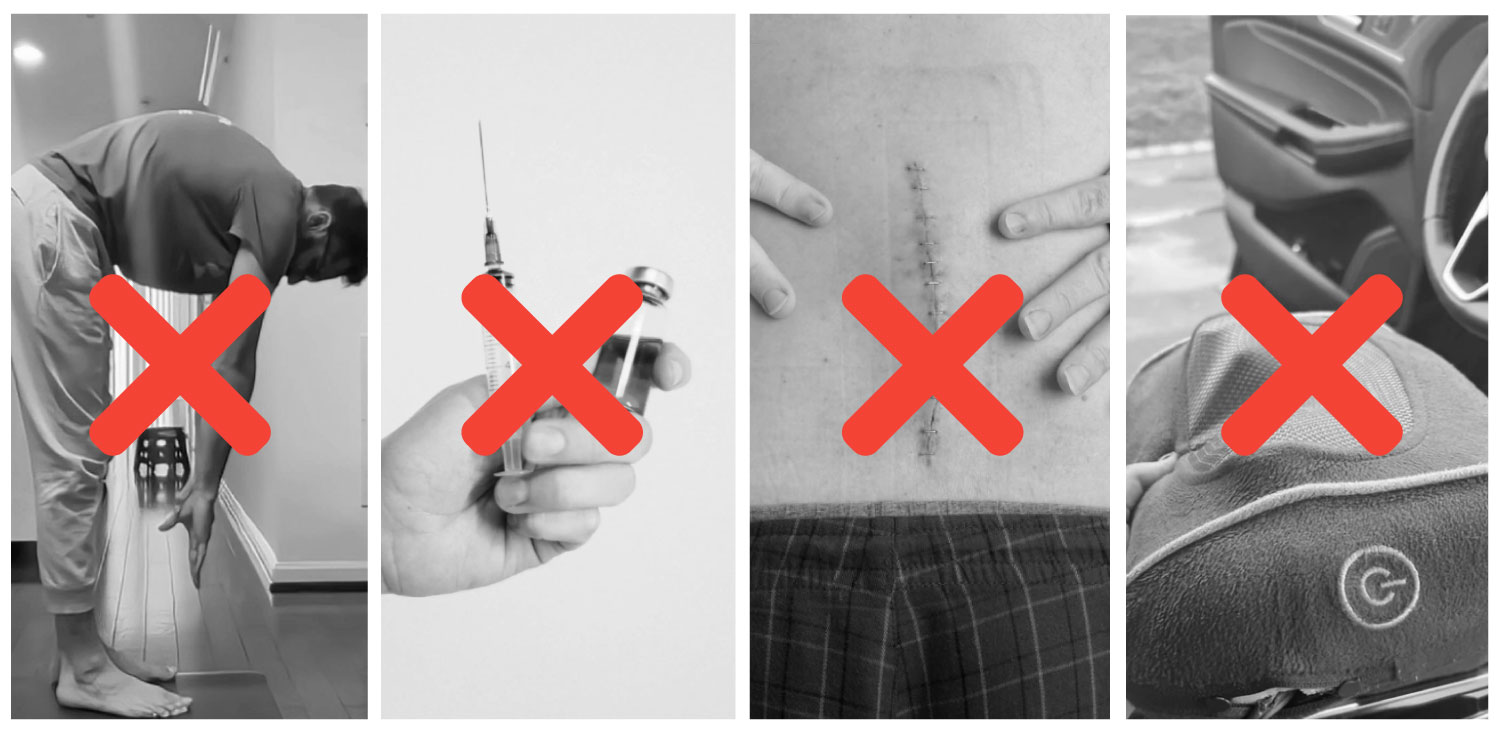
Physical therapy first. Steroid injections when PT fails.
Surgery when injections stop working. Pain management when
surgery fails — which happens roughly
40% of the time (per a major
review in The Spine Journal).
I never questioned the sequence.
But staring at my father's MRI that night — comparing it to the
hundreds I'd studied over three decades — I finally asked the
question that should have been obvious all along:
"Why are we all treating the disc... when the real problem is
the curve?"
Let me explain, because once you understand this, everything
about your sciatic pain will make sense.
Why Your Sciatica Keeps Getting Worse: The Simple Version
Think of your spine like a bridge.
Not a flat highway overpass. A stone arch bridge — the kind
that's stood for centuries. The kind the Romans built.
Why do arch bridges last so long? Because the curve is the
strength. The arch takes all the weight pressing down on it
and distributes it evenly across the entire structure.
Nothing gets crushed. Nothing collapses. The arch makes it
strong.
Now picture the space underneath that arch. That open space
is everything. Water flows through it. Boats pass under it.
It's protected by the curve above.
Your spine works the exact same way.
Your lower back has a natural inward curve — about 30 to 40
degrees. That curve is your arch. It's what distributes the
weight of your upper body evenly across your vertebrae. And
underneath that arch — in the space the curve creates — runs
your sciatic nerve. The longest nerve in your body, running
from your lower back all the way down each leg.
When the arch is there, the nerve has room. It's
protected. No crushing. No pain.
Now imagine what happens when you flatten a stone arch
bridge.
The curve disappears. The stones that were held in place by
the arch start pressing inward. The space underneath — the
space that was protecting everything — collapses. The whole
structure becomes unstable.
That's exactly what's happening to your spine right
now.
I call this Progressive Arch Collapse — and it's the single
structural failure that every sciatica treatment for the
last 30 years has left completely untouched.
Every hour you sit at a desk, hunch over a steering wheel,
or look down at your phone — you're pressing your arch flat.
Slowly. Relentlessly.
And unlike a sore muscle that bounces back after rest, your
spinal arch doesn't spring back on its own. It just keeps
flattening.
As your arch collapses, three things happen at once:
1. The space under the arch disappears — and your nerve
gets crushed. The openings your sciatic nerve passes through get narrower
and narrower. Imagine stepping on a garden hose. The water
stops flowing. That's your nerve signal right now — being
choked off by a collapsing arch.
2. The "stones" start grinding — and your discs dry
out. Without the arch distributing weight evenly, your vertebrae
press together unevenly. The discs between them — the
cushions — get squeezed flat. Like wringing out a sponge and
never letting go. The disc dries out, thins, and bulges
directly into your already-crushed nerve.
3. Your body tries to "save" the bridge — and makes it
worse. Your muscles sense the collapse and tighten around the
spine to hold it together. But here's the cruel part: that
tightening pulls your arch even flatter. The muscles trying
to protect you are actually accelerating the collapse.
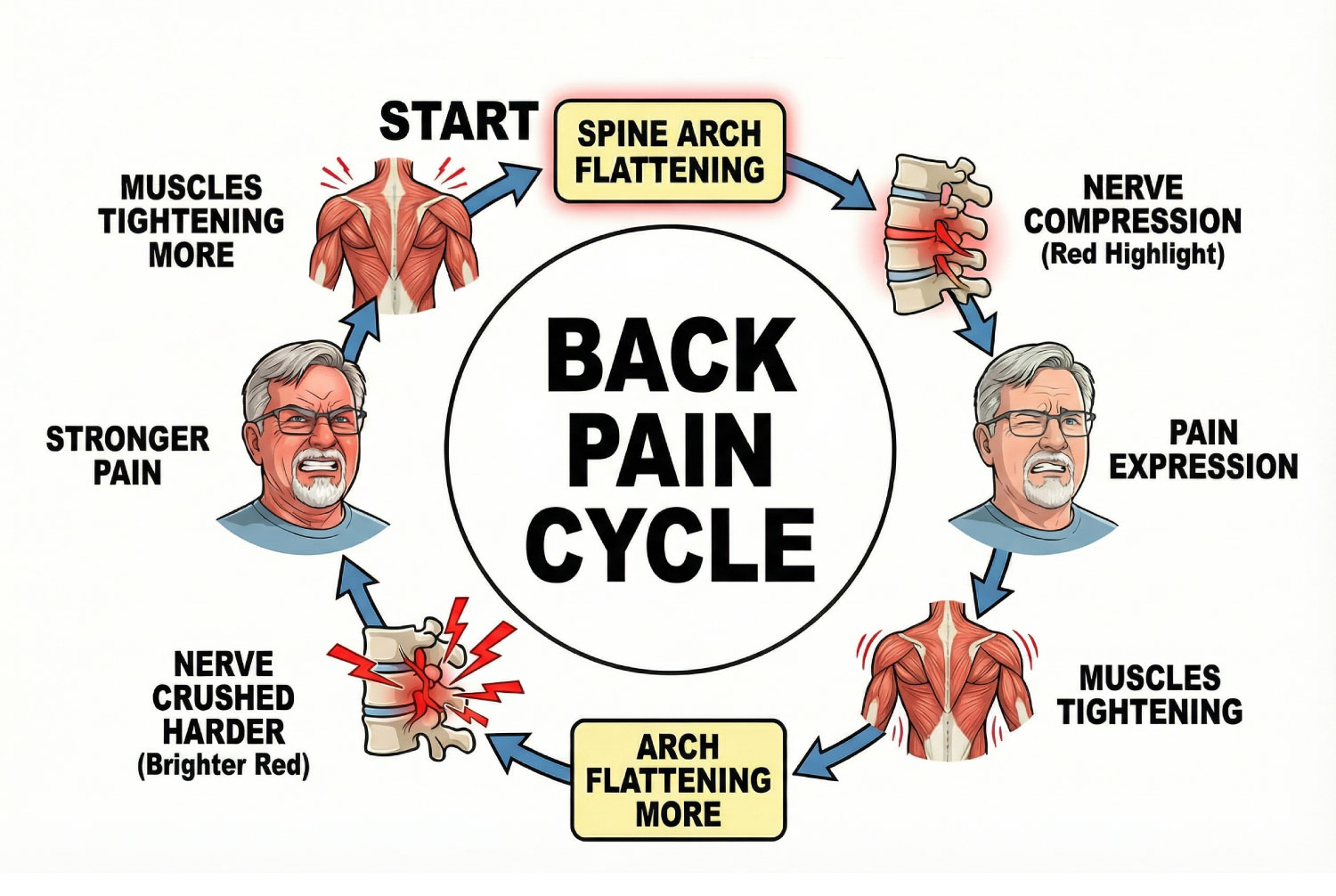
Now you're trapped in a spiral:
Arch flattens → nerve crushed → pain → muscles tighten to protect → arch flattens more
→ nerve crushed harder → more pain → muscles tighten more
![]()
This is the
sciatica spiral. And if you have any sciatic pain right now — even mild —
this loop is running inside your spine as you read
this.
The science confirms it. A major study in the European Spine
Journal found that chronic sciatica patients had
significantly flatter spinal curves than pain-free people.
Another study showed that restoring the arch reduced
pressure on the disc by up to 35% — enough to take the nerve
out of the danger zone.
The research has been clear for years.
But here's the frustrating part: restoring someone's spinal
arch doesn't generate injection revenue. It doesn't fill
surgery schedules. And the standard treatment pathway simply
doesn't include it.
So the medical system treats your pain, your inflammation,
your disc — everything downstream of the collapse. But
nobody rebuilds the arch.
It's like repairing the damage under a collapsing
bridge... without ever fixing the arch that's causing the
collapse.
Every treatment you try without restoring the arch is
temporary. The curve keeps flattening. The nerve keeps
getting crushed. And you keep coming back — and paying — for
the next round of symptom relief.
Until now.
⚠️ THE SCIATICA SPIRAL: Where Are You Right Now?
If you have any sciatic pain — even occasional tightness — here's
how this typically progresses:
Stage 1: The Curve Starts Going (Months 1-6)
Your lower back slowly loses its natural arch from prolonged
sitting or driving. You feel some tightness. Maybe an occasional
shooting pain. Most people ignore it or take ibuprofen.
This is your best window. Easiest to reverse here.Stage 2: The Spiral Takes Hold (Months 6-18)
Your flattened spine is now constantly pressing on your disc. The
disc bulges into the nerve. Inflammation builds. Your body
tightens muscles to "guard" the area — which flattens your spine
more. You're stuck in the loop. Pain becomes regular. It's
affecting your work, your sleep, your mood.
Stage 3: Your Nervous System Rewires (Years 2-4)
Your nerve has been crushed so long that your brain starts
amplifying pain signals — even when you're resting. Pain spreads
into your hip, your calf, your foot. Your disc is drying out
faster because the flat spine won't let it rehydrate.
Without restoring the curve, healing at this stage is nearly
impossible.Stage 4: Chronic Pain Takes Over (Years 3+)
Your nervous system has been fundamentally rewired by years of
pain. Depression, anxiety, and sleep problems follow. You're on
multiple medications. You're considering surgery — or you've had
it and it didn't work. Other parts of your body hurt from
compensating. You've become a chronic pain patient.
The critical thing to understand:
At every single stage, the engine driving it all is the same —
your lost spinal curve crushing your nerve.
Fix the curve, and the spiral stops.
Ignore the curve, and no pill, injection, or surgery will give
you lasting relief.
I watched my father go from Stage 1 to Stage 4 under three
years. Not one provider in his care addressed his spinal curve.
What the Research Pointed To: Three Things at Once
After finding my father on that couch, I spent four months buried
in research. I reviewed over 300 studies on spine mechanics. I
flew to conferences in Europe and Japan. I consulted with
biomechanics researchers at three universities.
Everything pointed to the same answer:
Real, lasting sciatica relief requires
three things happening at the same time
— not one at a time, not in isolation:
1. Restore the curve. Physically
reposition your spine back to its natural 30-40 degree arch so
the nerve has room again.
2. Rehydrate the disc. Use deep
therapeutic heat — infrared that penetrates 3-5mm to the disc
level — to bring fluid back into that dried-out, flattened
cushion.
3. Release the muscle lock. Use
targeted vibration at the exact right frequency to unlock the
deep muscles that are pulling your spine flat.
Here's why you need all three together:
Restore the curve without heat? Your disc is still dried out.
Pain comes back.
Apply heat without restoring the curve? You're warming a
compressed space. The fluid has nowhere to go.
Vibration without the other two? Your muscles relax for an hour
and tighten right back up because the structural problem is
still there.
All three. At the same time. That's what works.
The problem? No solution on the market did all three together.
Clinical decompression tables cost $4,000-$8,000 and require
office visits.
Infrared pads don't fix the curve.
Vibration belts aren't tuned for the deep muscles that
matter.
So I did what any surgeon who watched his father suffer would
do.
From Prototype to 21,500 Patients
![]()
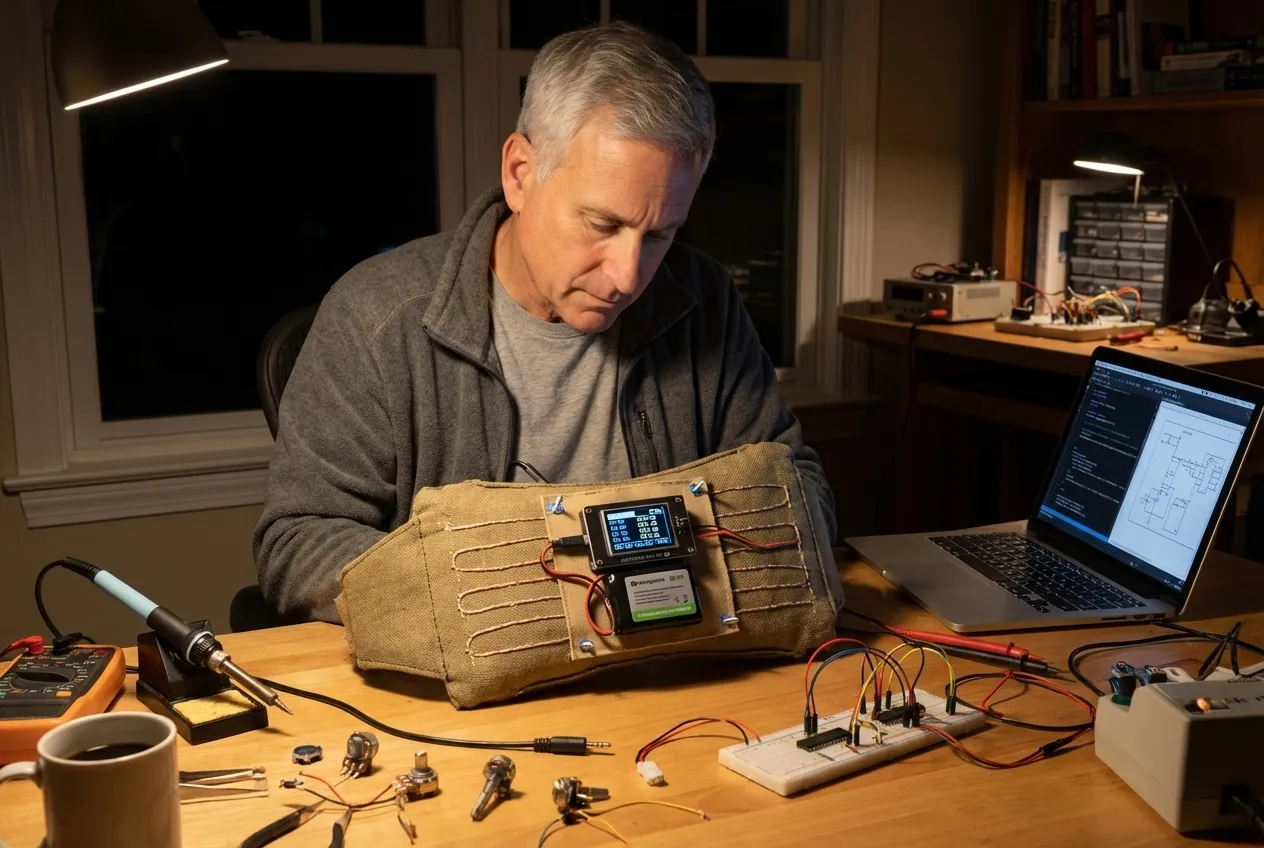
I partnered with a biomedical engineering team — two PhDs from MIT
and a medical device specialist with 14 FDA clearances under his
belt.
We spent 11 months on the engineering. The precision had to be
exact:
The curve:
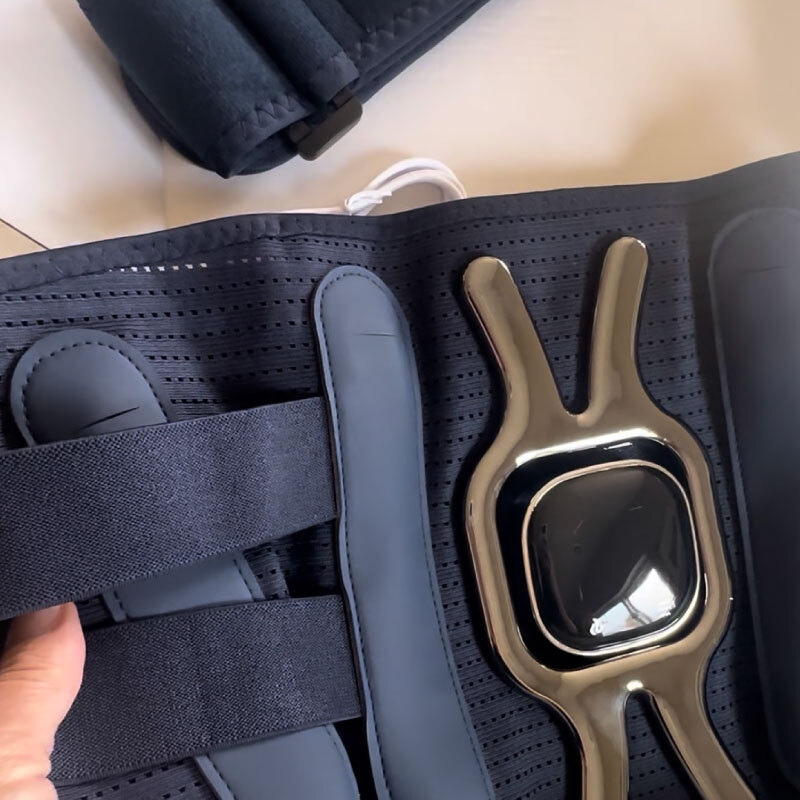
Contoured to restore 30-35 degrees of natural spinal arch
The heat:
Far-infrared at the specific depth and temperature that
reaches your disc — not just the skin surface
The vibration: Tuned to 30-50 Hz — the exact frequency that unlocks your
deep spinal muscles, not the surface ones
One degree off on the curve? Doesn't work. Wrong heat depth?
Surface-level warmth that won't reach the disc. Wrong vibration
frequency? You're buzzing the wrong muscles.
We built 19 prototypes. Tested on 47 volunteers from my
practice. Adjusted. Tested again.
Prototype #14 was the one I gave my father.
Four weeks later — 15 minutes a day, lying down, one button — he
called me.
He was crying.
"James. I can feel my left foot again. I walked to the mailbox
and back. It didn't hurt."
Six weeks: he was doing yard work.
Three months: he asked about volunteering to mentor young truck
drivers.
The man who told me his life was over was standing in Home Depot
comparing deck lumber.
That's when I knew this needed to go beyond my practice.
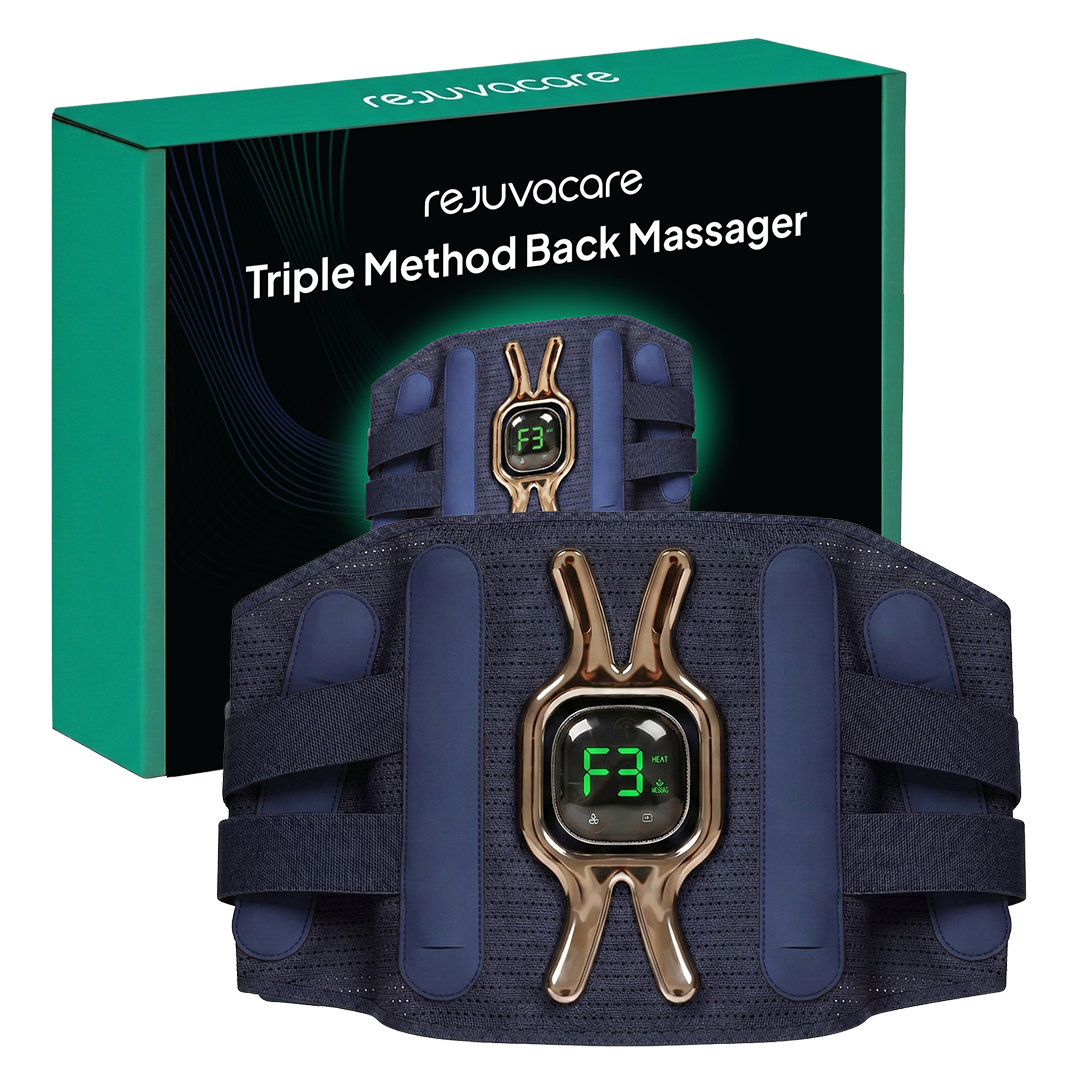
Introducing Rejuvacare: The Triple-Method Back Massager
This is not a heating pad. Not a vibrating belt. Not another back
brace you wear and hope for the best.
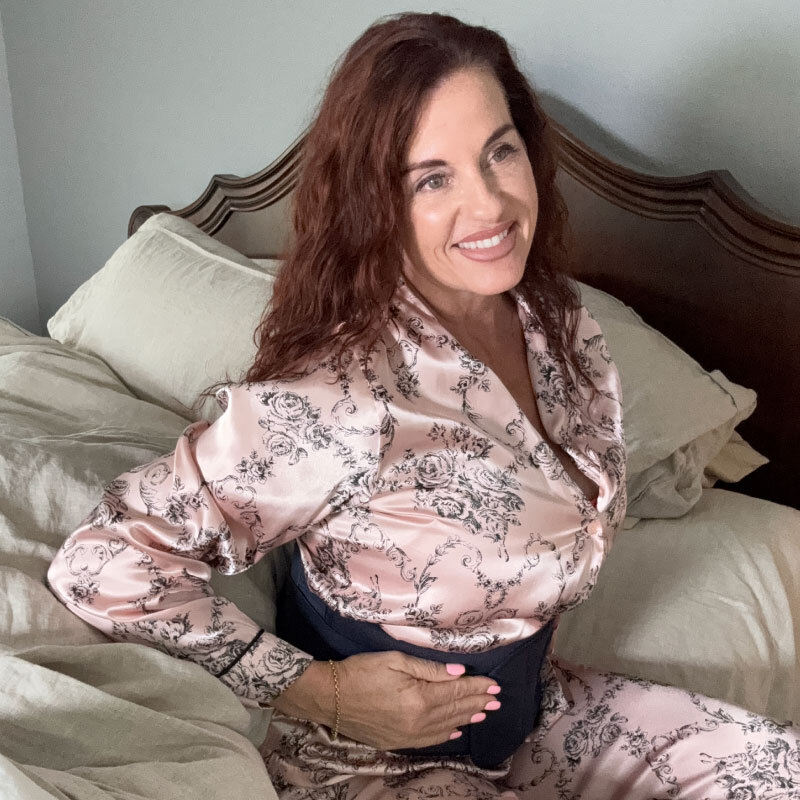
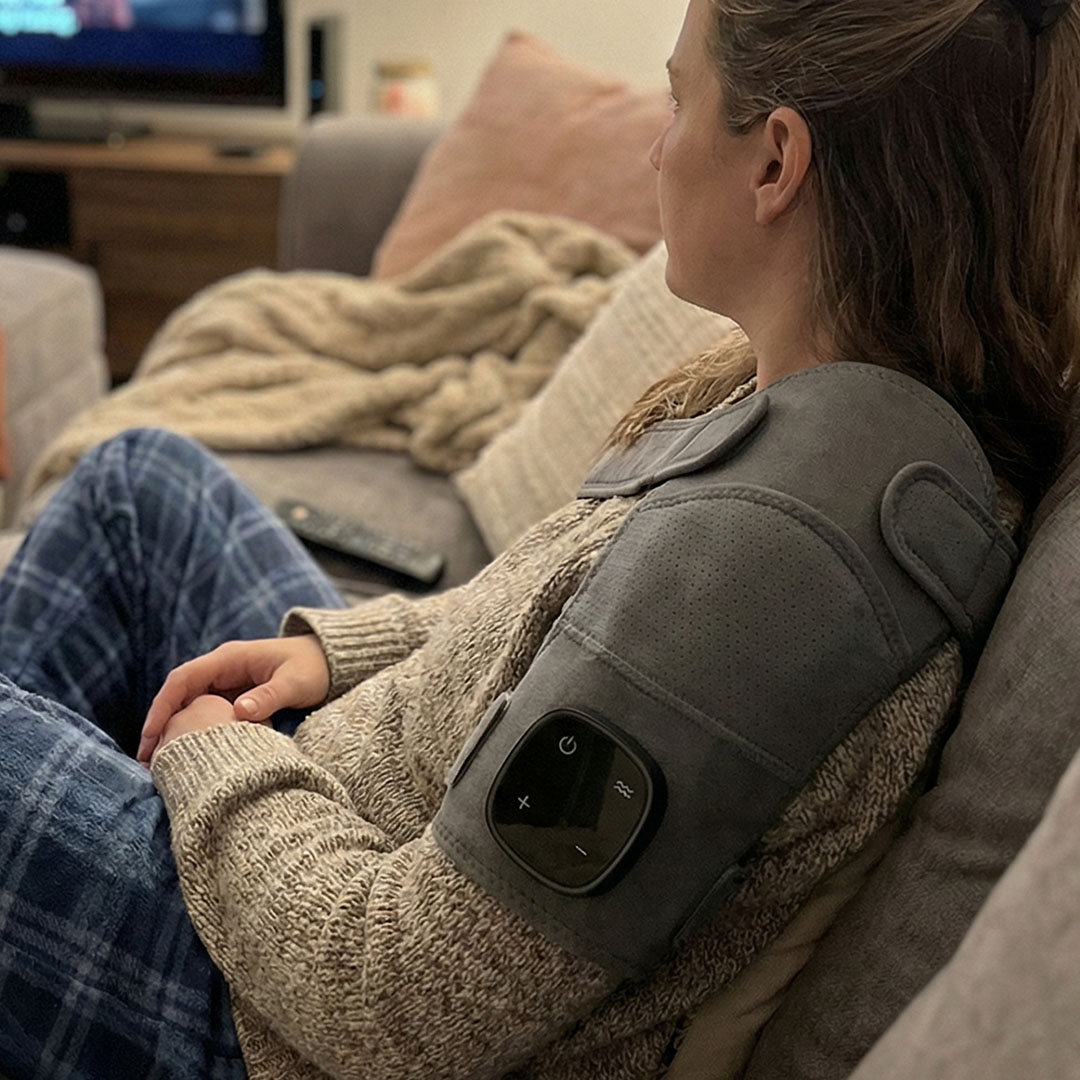
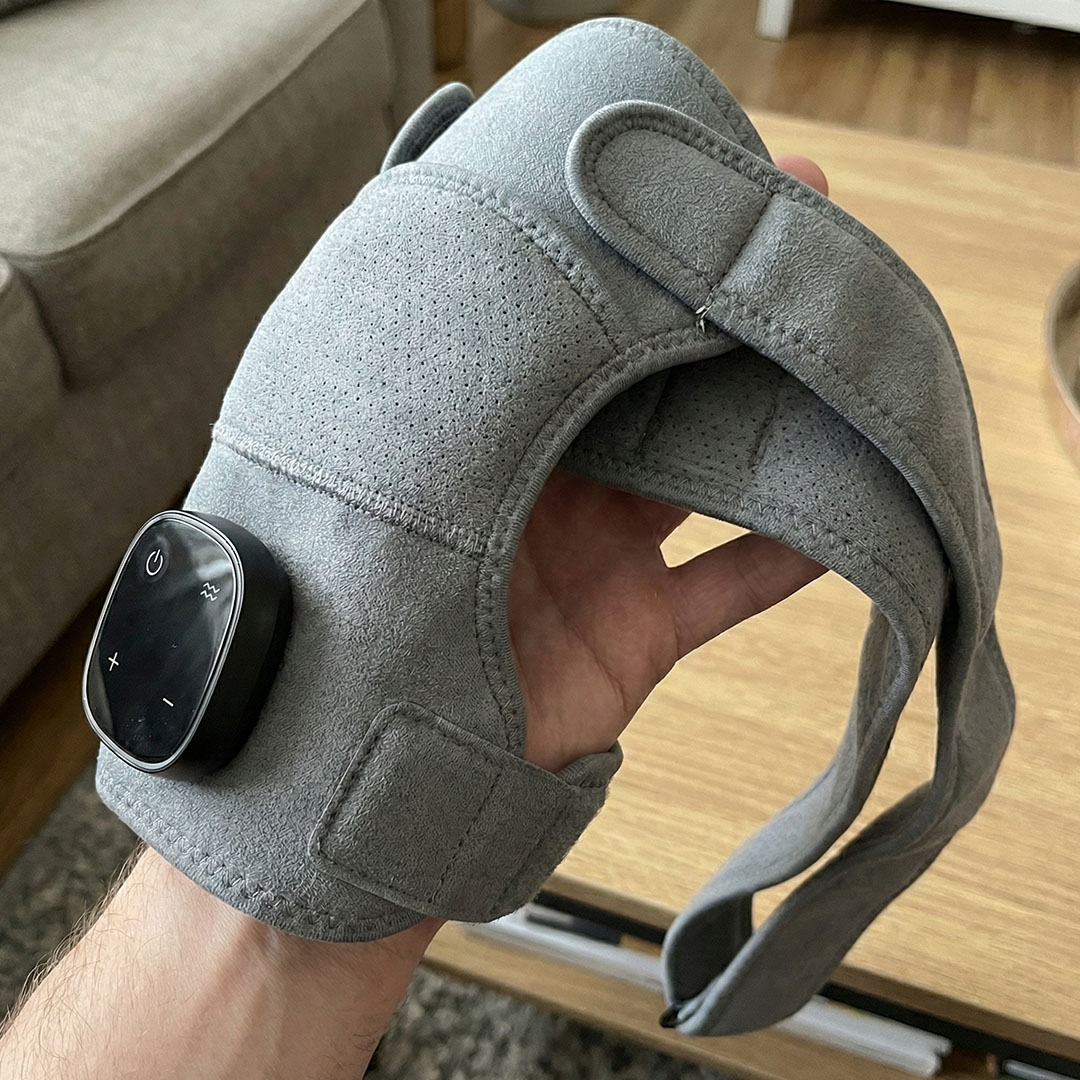
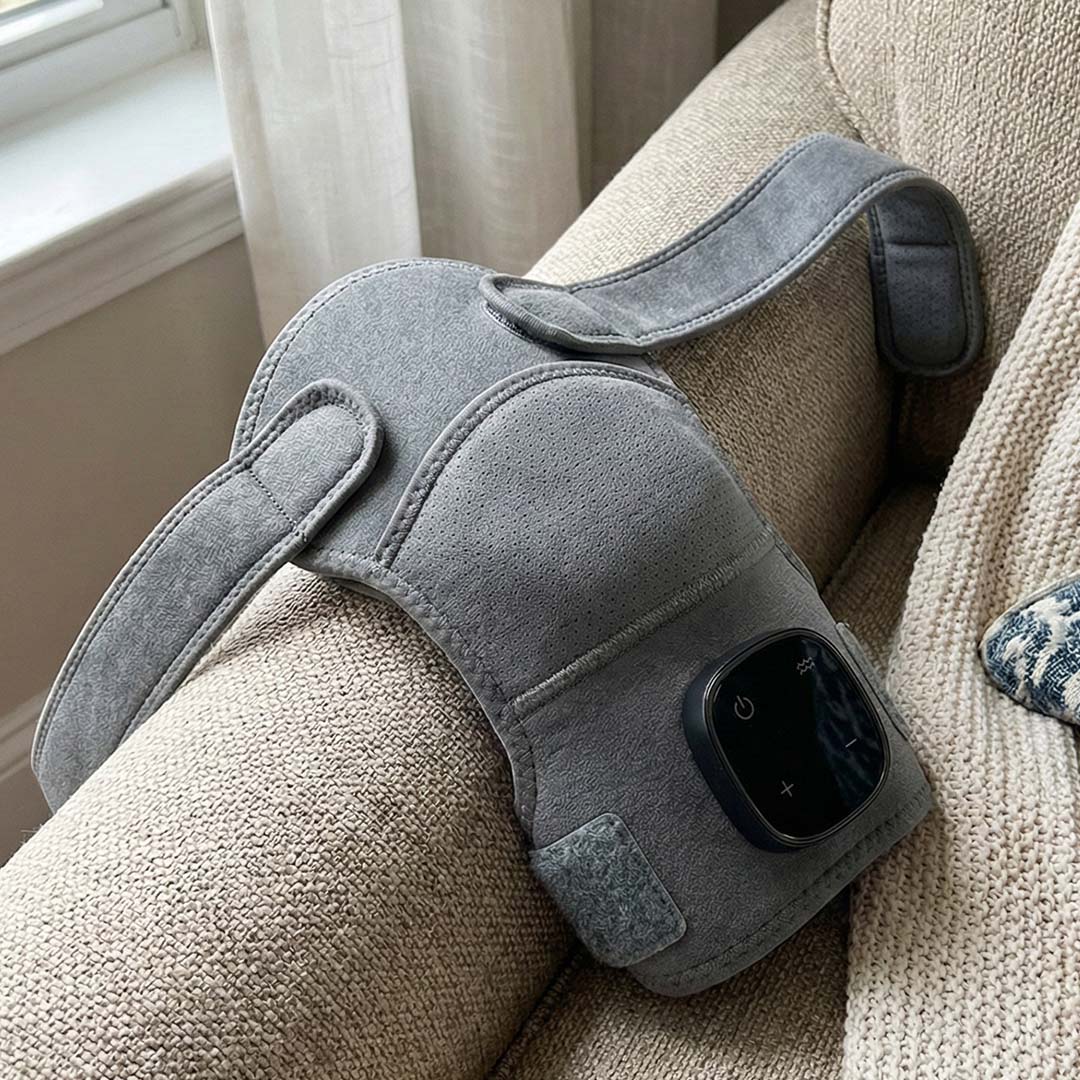
Rejuvacare Triple-Method Back Massager is the
only device engineered to do all three things at
once:
✦ RESTORES your spine's natural
curve — so your nerve finally has room to breathe
✦ REHYDRATES your dried-out disc
with deep infrared heat — so the cushion that's supposed to
protect your nerve fills back up
✦ RELEASES the locked-up muscles
that are pulling your spine flat — so the curve stays
restored
One button. 15 minutes. All three working together.
What Happens in Those 15 Minutes
15 minutes isn't arbitrary. Research on disc rehydration shows
osmotic fluid exchange requires a minimum of 4-5 minutes of
sustained positional decompression to begin. Infrared
penetration to disc depth requires 4-5 minutes of continuous
exposure. Deep muscle pattern release via vibration requires 4-5
minutes of sustained stimulation. Three phases. Five minutes
each. Engineered, not estimated.
Minutes 0-5: Your Spine Opens Up
The brace gently restores your natural curve. Within 60 seconds,
your vertebrae begin to separate. The space your crushed sciatic
nerve needs opens up. You feel immediate relief — that deep
"ahhhh" when pressure that's been building for months finally
lets go.
Minutes 5-10: Your Disc Comes Back to Life
With your spine now curved properly, deep infrared heat reaches
your disc. Blood flow increases. The dried-out disc starts
pulling fluid back in — like a sponge finally released from a
fist. Your disc is literally rehydrating.
Minutes 10-15: Your Muscles Finally Let Go
Targeted vibration hits your deep spinal muscles — the ones that
have been in lockdown mode, pulling your spine flat. They start
to release. Your nervous system gets the signal: "It's safe now.
You can relax."
After 15 minutes: Your curve is back, your disc is rehydrating, your nerve has
room, and your muscles have stood down.
Repeat daily for 3 weeks, and something remarkable happens: your spine starts holding
the restored curve on its own. The fix becomes the new normal.
You're not just managing pain — you're actually healing.
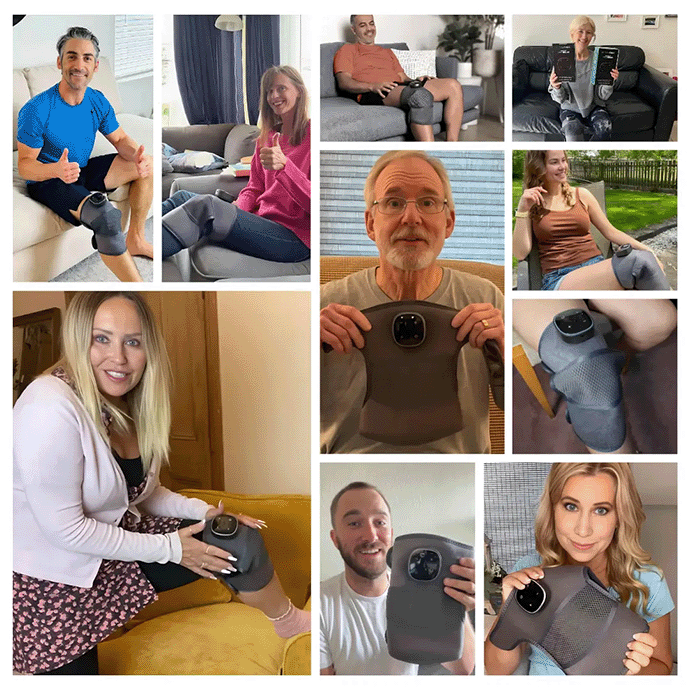
21,500 Users. Here's What We've Seen. ![]()
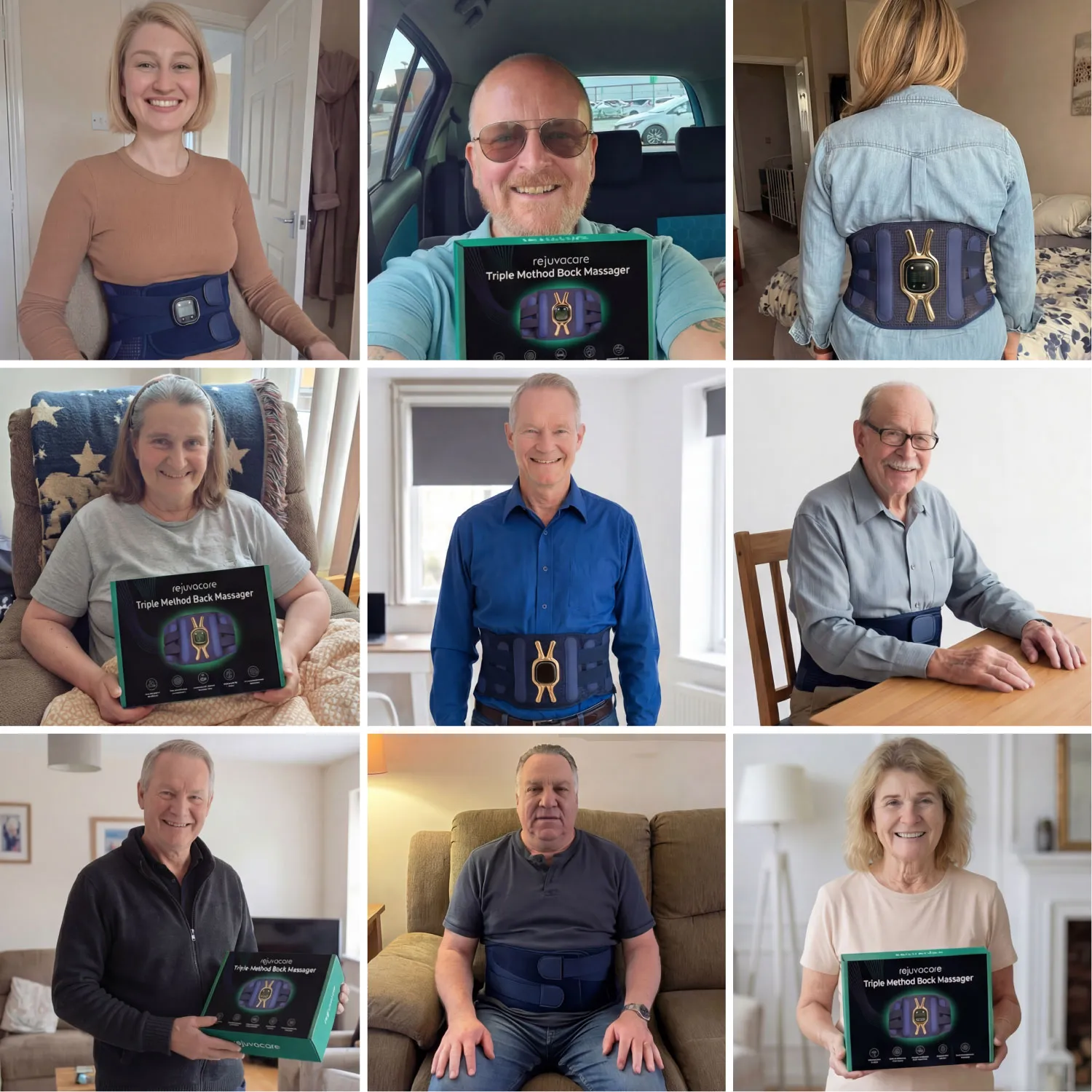
I want to be upfront: these are observed results from real
users, not a formal clinical trial. We're in the process of
setting one up with an independent research institution. Until
then, here's what the data shows:
Early-stage sciatica (Stage 1-2):
94% felt major pain relief within 7 days
91% stopped taking pain medication within 3 weeks
97% did not progress to chronic sciatica
Chronic sciatica (Stage 3-4):
87% reported significant or complete relief within 14 days
81% reduced or eliminated medications within 6 weeks
74% who'd been told they need surgery improved enough to
cancel it
Overall satisfaction: 99.7% (64 returns out of 21,500 units — a 0.3% return rate)
Spine surgery succeeds about 60% of the time
Epidural injections last 2-3 months on average
Physical therapy for chronic sciatica helps roughly
25-35% of cases
A 0.3%
return rate isn't a clinical trial — but 21,500 people voting with
their wallets is a powerful signal.
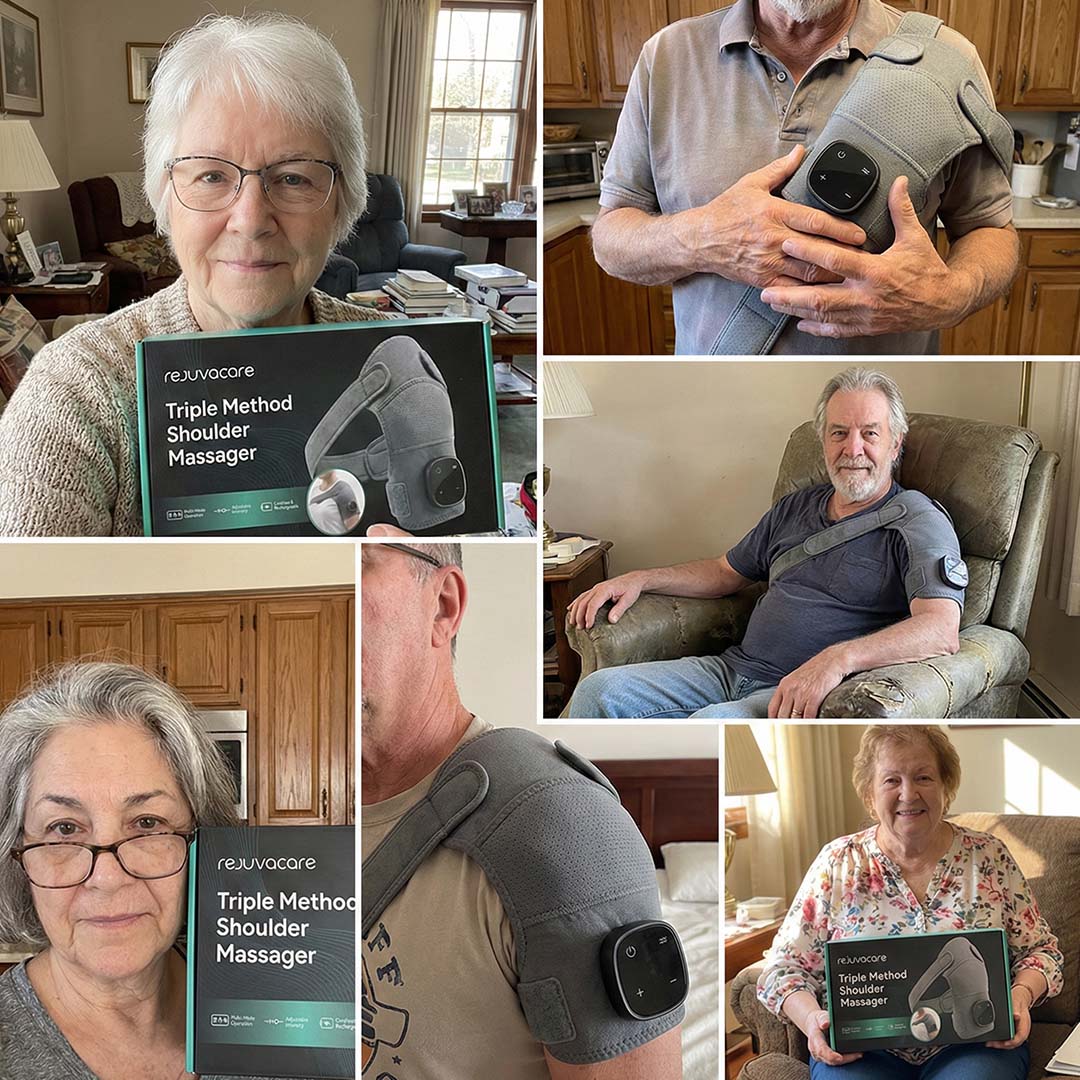
What Real Users Are Saying "I was 3 weeks from spine surgery. My doctor suggested trying
this first. Three weeks later, my follow-up MRI showed my disc
was actually rehydrating. I cancelled surgery. That was 8 months
ago. Still pain-free." —
Thomas P., 54, Seattle (verified
purchaser, shared with permission)
"Six years of sciatica. Four medications. Two weeks in this
brace — pain went from a daily 7-8 to a 1-2. I'm off three of
four meds. I sleep through the night for the first time in
years." —
Michelle D., 47, Chicago
(verified purchaser)
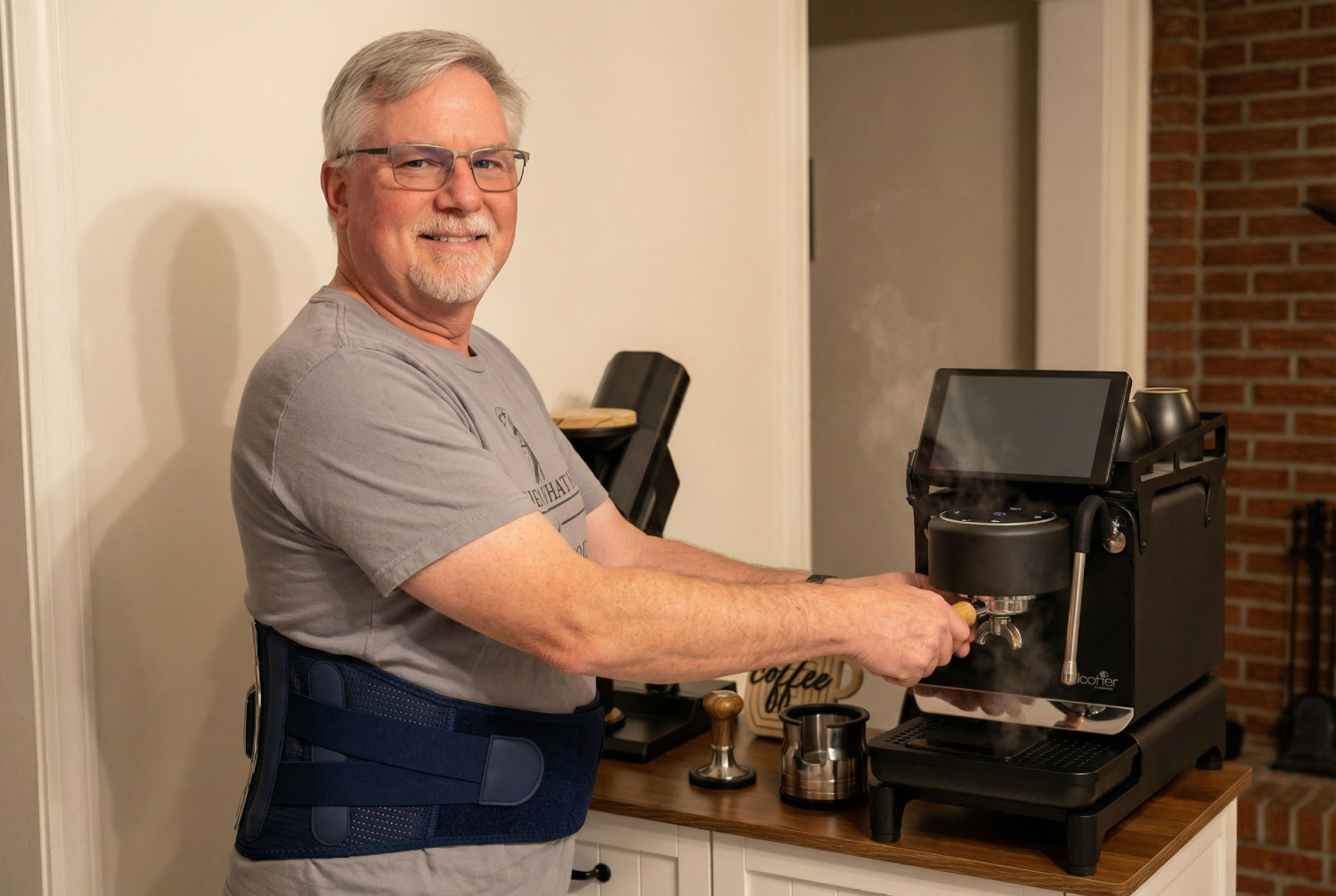
"Long-haul truck driver. Twelve hours in the cab destroyed my
back. Four weeks with Rejuvacare back massager— I'm running full
routes again. My fleet manager thought I was making it up." —
David L., 39, Houston (verified
purchaser)
What "Managing" Your Sciatica Actually Costs You
The Injection Treadmill:
Initial imaging + consultation: ~$3,500
Each epidural injection: ~$1,500
Typical: 3-4 injections per year
5-year cost: $26,000-$33,000
And the pain keeps coming back every 2-3 months because
your curve is still flat
The Physical Therapy Route:
2x per week at $125-$150 per visit after copay
12 months of "management": $10,000-$15,000
25-35% see lasting improvement for chronic sciatica
The core problem: PT strengthens muscles around a
collapsed structure. If nobody restores your curve,
you're building strength around the wrong shape.
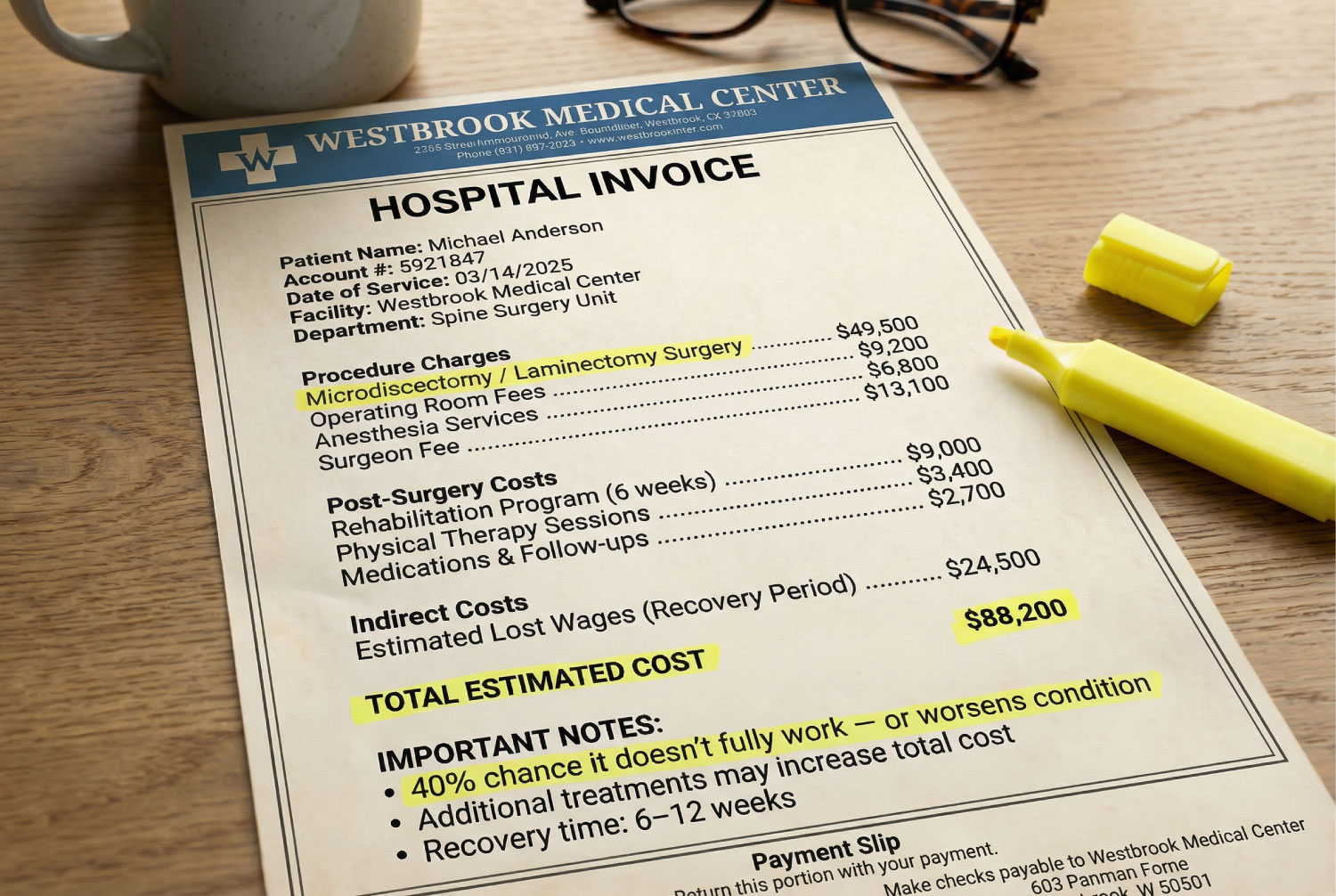
The Surgery Route:
Microdiscectomy or laminectomy: $35,000-$55,000
Post-surgery rehab: $6,000-$10,000
Recovery time and lost wages: $15,000-$30,000
40% chance it doesn't fully work — or makes things worse
Total: $56,000-$95,000 for roughly a coin-flip
outcome
The "Just Live With It" Route:
Monthly medications: $200-$500
Specialist visits and imaging: $3,000-$5,000/year
10-year total: $50,000-$80,000+
Plus: career limitations, relationship strain, 3x higher
risk of depression, and the slow shrinking of your life
around the pain
I'm not saying these treatments are useless. Injections help
people get through flare-ups. Good PT has real value. Surgery
saves lives when it's truly needed.
But if nobody reverses your
Progressive Arch Collapse, you're
just patching the damage under a collapsing bridge. The collapse
continues. The bills continue. And the pain continues.
Now Let's Talk About Money (This Is the Part That Makes
People Angry)
![]()
You just read what sciatica costs when you don't fix the curve:
Injections: $26,000-$33,000 over 5 years — and the pain comes back
every 2-3 months
PT:
$10,000-$15,000 — strengthening muscles around the wrong
shape
Surgery:
$56,000-$95,000 — for a coin flip
"Living with it":
$50,000-$80,000+ in medications and visits — while your
life shrinks around the pain
Now here's what fixing the actual problem costs:
Clinical-grade spinal decompression devices — the kind you'd
find in a surgeon's office — run
$2,200 to $4,000. And you'd still
need to book appointments, drive to a clinic, and pay per
session.
Rejuvacare Triple-Method Back Massager delivers the same
three-mechanism protocol. In your home. On your schedule. No
appointments. No copays. No waiting rooms.
Regular price: $299.95
Already less than a single epidural injection. Less than two
weeks of physical therapy. Less than the consultation where a
surgeon tells you "let's wait and see."
But right now — because we're still in our introductory launch
and building our clinical evidence base — you won't pay $299.95.
Today's price: $119.95
Let that sink in for a second.
$119.95 to own the only device
that restores your spinal curve, rehydrates your disc, and
releases the muscles crushing your nerve — all at once.
That's one chiropractor visit that wears off by Tuesday.
That's what you spent last month on pain pills that wore off by
noon.
That's less than the gas and copays from your last specialist
visit — the one where they told you to "keep doing your
stretches."
Meanwhile, the system wants you back every month. Every
injection. Every refill. Every follow-up.
$26,000 to $95,000 over the next
few years — treating symptoms of a curve nobody's fixing.
Or $119.95 once — and you fix the
curve.
One of those options keeps you paying. The other one keeps you
healed.
Why This Price?
![]()
Because I didn't build this to maximize profit.
I built it because I watched my father lose years of his life to
a structural problem that had a structural solution — and nobody
offered it to him.
I want this in the hands of the truck drivers, the office
workers, the nurses, the parents — the people whose spines are
quietly collapsing while the system keeps cycling them through
treatments that never touch the real problem.
⚠️ This Price Won't Last
The $119.95 introductory price holds until we hit
5,000 units sold in this
production batch — at which point we move to standard pricing
while we await our independent clinical trial results.
We're at 3,847 sold. Our factory
produces 500 units per week. Last month's batch moved through in
19 hours once word got out.
Once we cross 5,000, this page updates to $299.95 automatically.
Still worth it — but not $119.95.
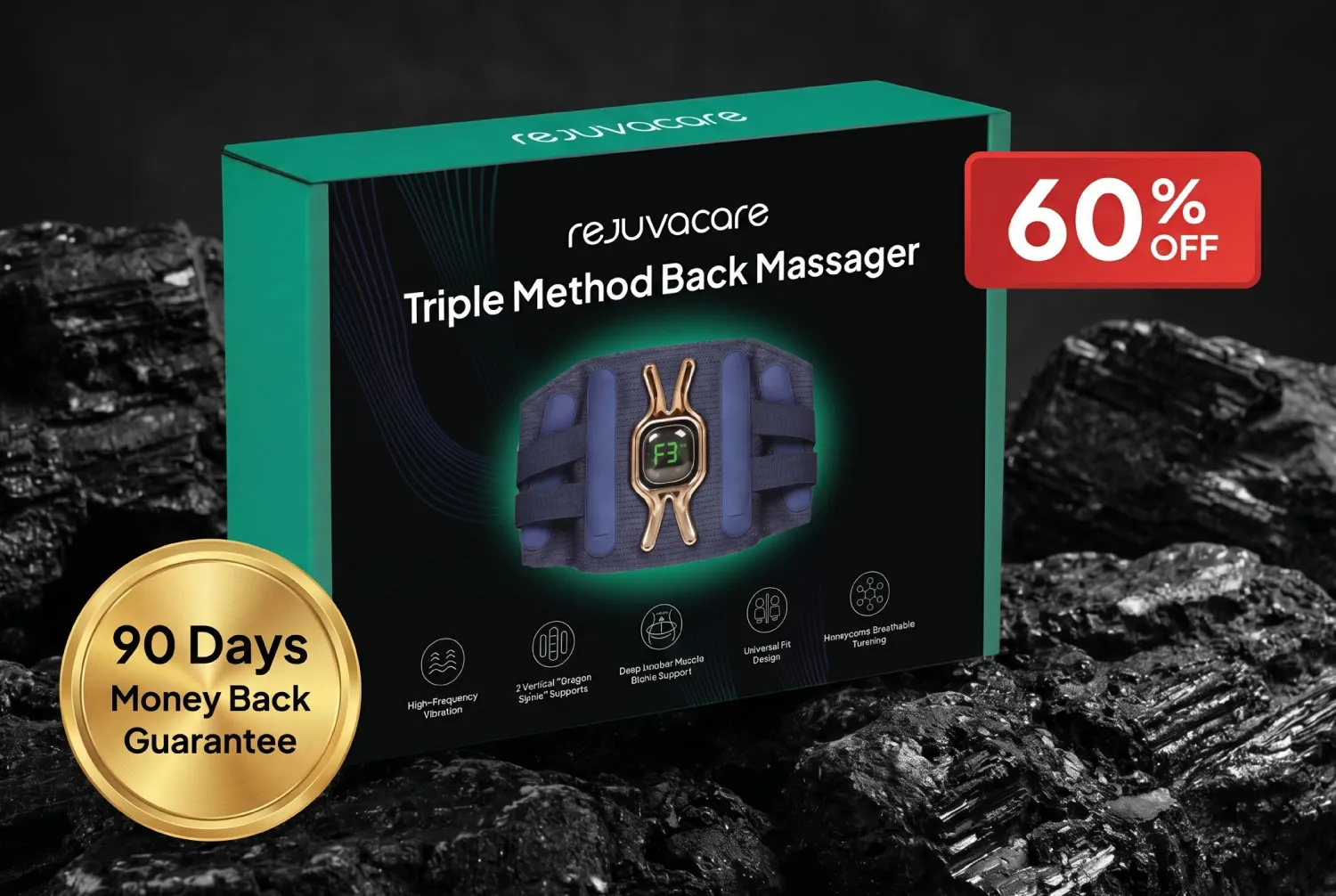
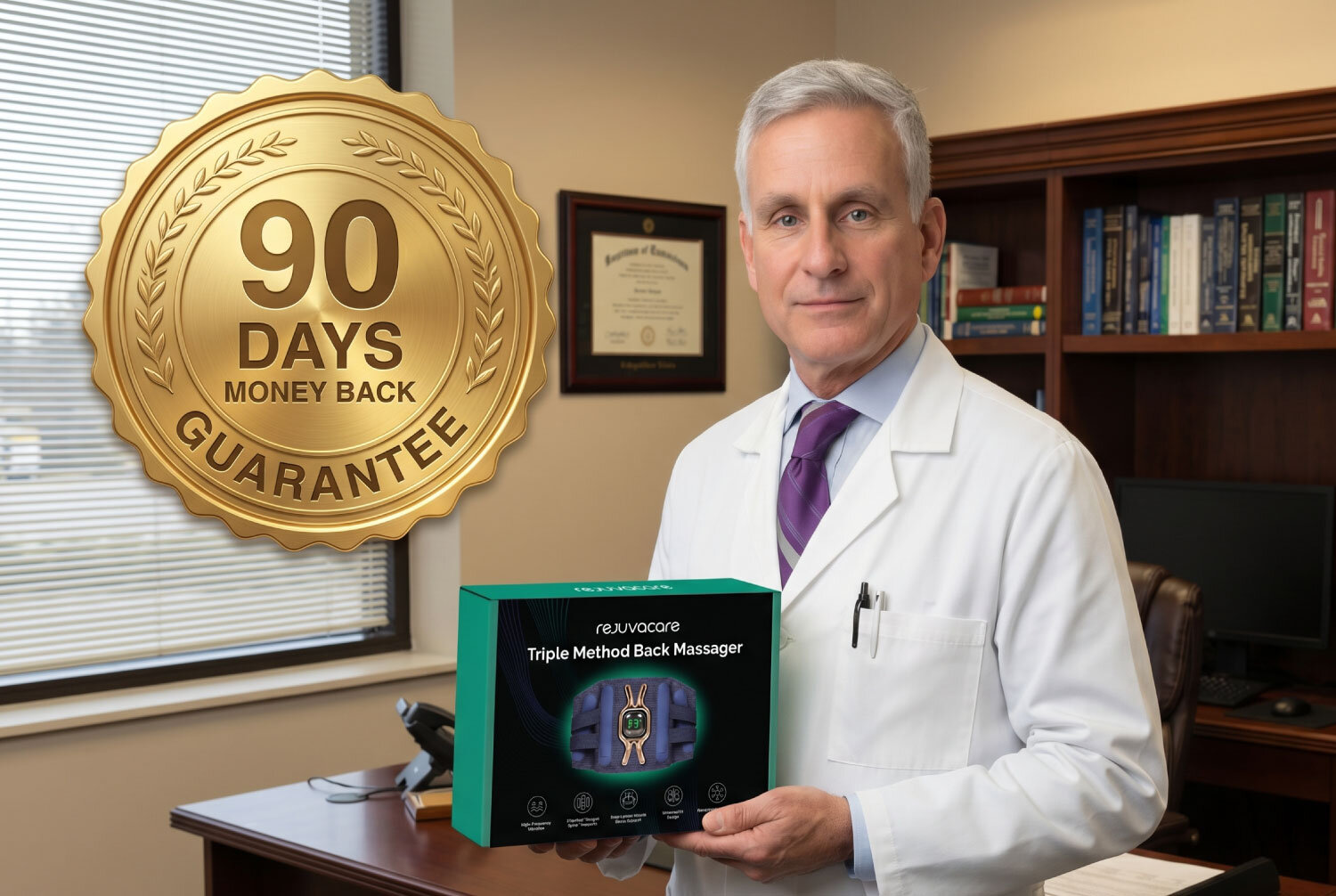
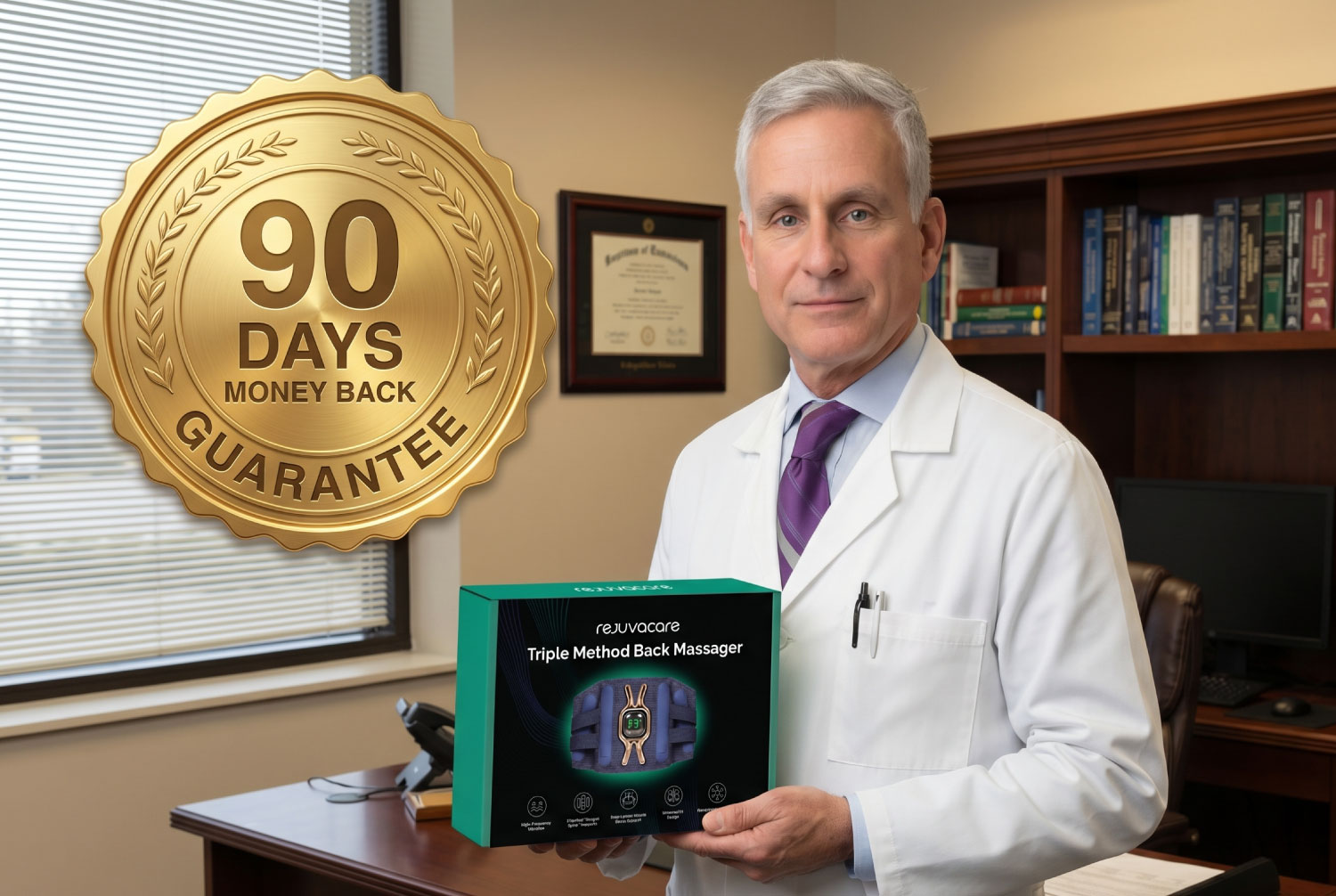
My Personal 90-Day "Pain-Free" Guarantee
![]()
You've been burned before. You've spent money on things that
didn't work.
So here's my promise:
Use Rejuvacare Triple-Method Back Massager every day for 90
days. If you don't feel a real, honest improvement — if you can't say
"my sciatica is genuinely better" — email us. Full refund. No
forms. No questions. No hassle.
Why am I this confident?
Because 64 people out of 21,500 have asked for a refund. That's
a 0.3% return rate.
I'm not betting on hope. I'm betting on physics.
⚠️ THIS 60% DISCOUNT EXPIRES IN 72 HOURS ⚠️
After that, the price is $199.95. And units are
selling out fast.
![]()
Path 1: Do nothing.
Your
Progressive Arch Collapse continues.
Every hour of sitting presses your spine a little flatter. The
spiral advances — one stage at a time, the way it always
does.
In 3-5 years, there's a strong chance you'll be a chronic
sciatica patient. Multiple medications. Possible surgery. Your
nervous system rewired around pain. Your world getting smaller
every year.
Path 2: Fix it now.
$119.95. Fifteen minutes a day.
One week: Pain significantly
reduced. You can sit, stand, and move without that lightning
bolt down your leg.
One month: Your disc is
rehydrating. You're sleeping through the night. The hot-knife
sensation is fading.
Three months: The spiral is
broken. Your spine is holding its curve again. You're not
managing pain — you've fixed what was causing it.
The difference between these two paths gets bigger every single
day you wait.
1) Click
"
RESTORE MY SPINE — 60% OFF" below
2) Choose your package (Most
people order 2 — one for home, one for work or travel. Many send
one to a parent or spouse who's suffering.)
3) Fill in your shipping info
(Before 2 PM EST = ships today. After 2 PM = ships
tomorrow.)
4) Wait 3-5 days for your
Rejuvacare Triple-Method Back Massager to arrive
5) Use it for 15 minutes the
moment you open the box
6) Tell us how you feel:
1-800-REJUVACARE (We read every
message. Your recovery matters to us personally.) Don't close
this page thinking "I'll come back tomorrow."
Tomorrow is another night of sciatic pain.
Tomorrow your spine flattens a little more.
Tomorrow the introductory price is closer to gone.
Your spine doesn't have a pause button. But it does have a fix.
Rejuvacare Triple-Method Back Massager
FDA-Registered | 21,500 Users | 90-Day Money-Back
Guarantee ![]()
You can take advantage of this unique offer for 3 days only!
INTERNET ONLY OFFER!
![]()
FOR A LIMITED TIME:
60% OFF + THEY PAY FOR SHIPPING
LIMITED TIME READER-ONLY SPECIAL:
Ordering now makes you eligible for 60% OFF Triple Method
Massager. Only available here. Limited to first 500
customers only.
With genuine care for your spine and your future,
Dr. James Barkley,
MD Board-Certified Orthopedic Surgeon Creator, Rejuvacare
Triple-Method Back Massager
P.S. — Called my dad yesterday. He's at the hardware store
buying lumber for a deck he's building — something he hasn't
done in five years. He was laughing. Actually laughing. The
man who sat on that couch convinced his life was over is
mentoring young drivers on weekends, doing yard work, and
planning a road trip with my mom. Restoring his curve gave
him his life back. Yours is waiting.
P.P.S.
— Rejuvacare Triple-Method Back Massager is FDA-registered,
manufactured in an ISO-certified facility, and recommended
by orthopedic doctors across 14 states. 21,500 users. 99.7%
satisfaction. We did this the right way.
P.P.P.S. — We're at 3,847 of 5,000 units at the introductory price.
When we cross 5,000, this page updates and the discount's
gone. Don't say I didn't warn you.








4 · 39 min